
Permits · Updated August 2026
Permit timelines in Los Angeles: what the law requires
Permit timing in Los Angeles is governed by three separate things: deadlines written into California statute, procedures published by the reviewing agency, and local workload. The first two are documented and enforceable. The third is not, which is why published estimates vary so widely. This page separates them and cites the source for every figure.
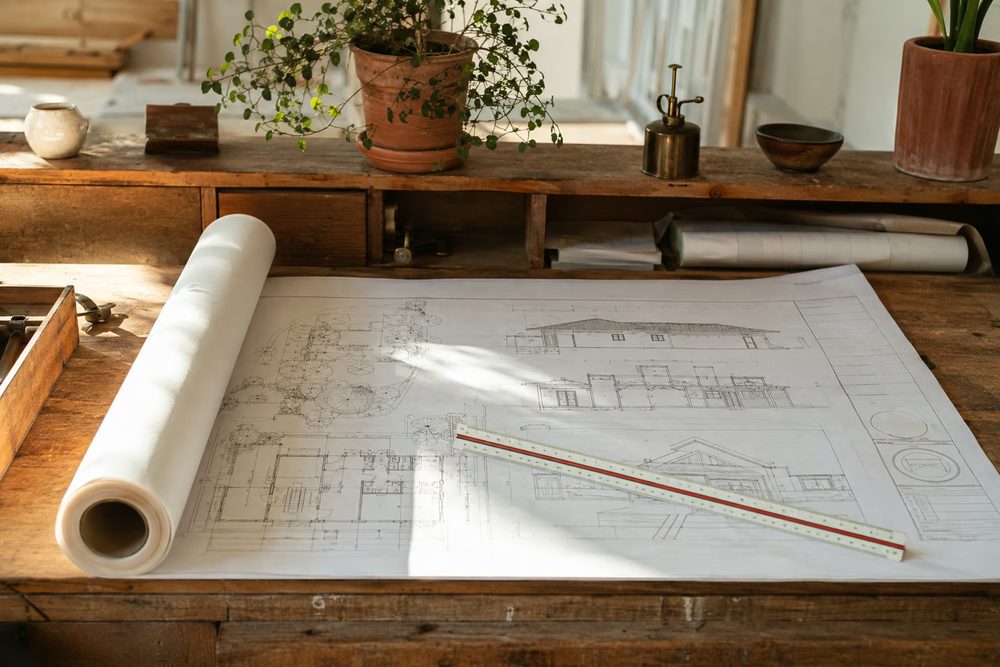
For accessory dwelling units, California law sets a hard decision deadline with an automatic approval if the agency misses it. For conventional additions inside the City of Los Angeles, a substantial share of projects qualify for same-day counter review rather than the multi-week queue most homeowners assume is unavoidable.
The variable that actually determines when you break ground is neither of those. It is how many correction cycles your submittal goes through, and that is decided before it is ever filed.
The scale of it
Accessory units are now the majority of what Los Angeles builds
Accessory dwelling units are no longer a marginal category in Los Angeles. They are the majority of what actually gets built. The figures below are the most recent published at the time of writing.
Reference
The numbers that govern a Los Angeles permit
| What | Figure | Source |
|---|---|---|
| Statutory decision deadline, ADU | 60 days from a complete application | Gov. Code §66317 |
| Consequence of missing it | Application is deemed approved | Gov. Code §66317 |
| Completeness determination | 15 business days | SB 543, effective 1 Jan 2026 |
| Review type, conforming ADU | Ministerial. No hearing, no CEQA | Gov. Code §66317 |
| Impact fee exemption threshold | Under 750 sq ft | State ADU law |
| LADBS counter review | Same day, typically 2 to 3 hours | LADBS Expanded Counter Plan Check |
| Unpermitted ADU amnesty cutoff | Built before 1 January 2020 | AB 2533, effective 1 Jan 2025 |
| Statewide ADU permits, 2016 vs 2024 | 1,336 rising to 30,354 | California HCD |
Deadlines written into state law
What California requires of the permitting agency
California ADU law was reorganised by SB 477 and now sits at Government Code sections 66310 to 66342. Material published before 2024 cites the former section 65852.2, which is a reliable indicator that the source has not been updated. These provisions apply in every jurisdiction we work in, from the City of Los Angeles to Thousand Oaks.
A 60-day decision deadline, with automatic approval
Government Code section 66317 requires the permitting agency to approve or deny an ADU or JADU application within 60 days of receiving a complete application, where a dwelling already exists on the lot. If the agency does not act within that window, the application is deemed approved by operation of law. This is a statutory deadline with a defined consequence, not an internal service target.
A 15 business day completeness determination
SB 543 took effect on 1 January 2026 and requires the agency to determine whether an application is complete within 15 business days. If it does not respond, the application is deemed complete and the 60-day clock begins regardless of whether anyone has reviewed it.
Ministerial review, with no discretionary process
A conforming ADU is reviewed ministerially. There is no public hearing, no discretionary design review and no CEQA analysis. The agency verifies the drawings against objective standards. There is no procedural forum in which a neighbour's objection can be raised, which was the legislature's explicit intent.
An impact fee exemption below 750 square feet
State law exempts accessory dwelling units under 750 square feet from impact fees. This is a cost provision rather than a timing one, and it explains why a considerable share of California ADUs are built at close to that threshold.
Unpermitted work
The 2025 route for garage conversions built without a permit
Los Angeles contains a large stock of garage conversions and back-house units that were built without permits. Since January 2025 there has been a defined route to legalising them.
AB 2533, effective 1 January 2025, amended the state ADU statute to cover unpermitted accessory dwelling units and junior accessory dwelling units constructed before 1 January 2020. It moved the qualifying cutoff forward from 2018 and extended coverage to JADUs.
The provision restricts a local agency's ability to deny a permit for such a unit on the basis of the earlier violation, requiring instead a finding that correcting the violation is necessary for health and safety. In practice this converts a category of property that was effectively unsellable into one that can be documented and disclosed.
It is not a blanket amnesty and it does not waive life safety requirements. Whether a specific unit qualifies depends on when it was built and what condition it is in, which is an assessment rather than a form. But the route exists, and a great many Los Angeles homeowners with a converted garage do not know it does.
Inside the City of Los Angeles
The counter route most homeowners never hear about
For addresses inside the City of Los Angeles, which includes North Hollywood, Studio City, Sherman Oaks, Woodland Hills, Northridge, Reseda and the Hollywood Hills, plan check runs through LADBS.
LADBS operates tiered review rather than a single queue, and the tier most relevant to residential additions is the one homeowners hear about least.
Expanded Counter Plan Check covers projects too involved for a brief counter review but smaller than a full plan check submission, a band that includes a meaningful share of medium-sized residential additions. Plans are reviewed on the day they are submitted, typically within two to three hours, at the Metro, Van Nuys, West LA, South LA and San Pedro offices.
Eligibility is determined by LADBS according to project scope, not by the applicant. It is worth establishing early, because the difference between qualifying and not qualifying is the difference between an afternoon and a multi-week cycle.
Where the time really goes
What determines your actual schedule
Correction cycles rather than review speed
Each round of corrections returns the submittal to the queue. A complete, coordinated set that clears in one round is dramatically faster than a thin set that clears in three, even where the agency's per-review time is identical. This is the single largest controllable variable in the process.
Whether a second review body is triggered
Hillside review, historic and landmark district review, coastal jurisdiction, homeowner association architectural committees and municipal design review boards each run their own queue alongside building plan check. Establishing which apply to a specific parcel before design begins is most of what protects a schedule.
Whether the application was genuinely complete
An incomplete application does not start any clock, statutory or otherwise. It is the most common avoidable delay in the process and it is entirely a function of preparation.
Which jurisdiction has authority
West Hollywood, Beverly Hills, Pasadena, Glendale, Burbank, Santa Clarita and Thousand Oaks each operate independent building departments with their own staffing and workload. None publishes comparable turnaround data. Any specific day count quoted across these jurisdictions is an estimate drawn from individual experience rather than from published figures, and should be treated accordingly.
Straight answers
Permit questions we get asked
How long does it take to get a room addition permit in Los Angeles?
It depends on the project type and the reviewing agency, and any source offering a single figure is generalising. For an ADU, Government Code section 66317 caps the decision at 60 days from a complete application. For a conventional addition inside the City of Los Angeles, a share of projects qualify for same-day counter review through LADBS while the remainder go through full plan check with correction cycles. Submittal completeness is the variable that most reliably shortens the process.
Is the 60-day ADU deadline enforceable?
Yes. Government Code section 66317 requires approval or denial within 60 days of a complete application, and provides that the application is deemed approved if the agency fails to act. The operative word is complete, which is why SB 543 added a 15 business day deadline for the agency to determine completeness, effective January 2026.
Can a room addition be permitted over the counter?
Within the City of Los Angeles, sometimes. LADBS operates an Expanded Counter Plan Check process for projects above a brief counter review but below full plan check, covering a meaningful share of medium-sized additions. Review takes place the same day, typically in two to three hours. Eligibility is determined by LADBS based on scope.
My garage was converted without a permit. Can it be legalised?
Possibly. AB 2533, effective January 2025, addresses unpermitted ADUs and JADUs built before 1 January 2020 and limits an agency's ability to deny a permit on the basis of the original violation. It is not a blanket amnesty and life safety requirements still apply, so whether a particular unit qualifies is a matter of assessment. The route exists, which is more than was true before 2025.
Why do contractors quote such different permit timelines?
Because most quote from recent personal experience rather than published data, and that experience may reflect a different jurisdiction, project size or year. Departmental throughput changes with staffing and workload. A specific day count without a cited source should be treated as an estimate.
Does a larger project take longer to review?
Not necessarily in per-review time, but usually in total elapsed time. Larger projects carry more drawings and more disciplines to coordinate, which increases the surface area for corrections, and each correction is an additional cycle. The number of review rounds matters more than the size of the submission.
Sources
Where these figures come from
Every figure on this page is drawn from the following. Statutory citations reflect the post-SB 477 numbering. Page last reviewed August 2026.
- California Government Code sections 66310 to 66342. State ADU and JADU law, as reorganised by SB 477. Section 66317 governs the approval deadline, deemed approval and ministerial review.
- SB 543 (2025), effective 1 January 2026. Fifteen business day completeness determination and appeal provisions.
- AB 2533 (2024), effective 1 January 2025. Permitting route for unpermitted ADUs and JADUs constructed before 1 January 2020.
- California Department of Housing and Community Development. Statewide ADU permit volumes, 2016 through 2024, and ADU share of total homes permitted.
- Los Angeles Department of Building and Safety. City of Los Angeles permit counts for 2024, and the Expanded Counter Plan Check process.
We handle this part
Plan check corrections come back to us
We produce the drawings, submit them, and work every correction through to approval. Permit fees are passed through at cost as their own line so you can see exactly what the city took.
Tell us about your project
Send us the shape of it and we'll call you back, usually the same day. You will talk to someone who builds these, not a scheduler.
Ready to talk about your addition?
Tell us what you are picturing and we will tell you what it takes to build it, what your city will allow, and where the money actually goes.